Best non-toxic cutting boards (2026): Our top wood & bamboo picks

Affiliate Disclosure: This post may contain affiliate links. If you make a purchase through these links, we may earn a small commission at no extra cost to you. We only recommend products we genuinely believe in. Learn more
Medical Disclaimer: This content is for informational purposes only and is not medical advice. Please consult a healthcare professional before making health-related decisions. Full disclaimer
In This Article
- Best non-toxic cutting boards
- Best bamboo cutting boards
- Best non-toxic cutting boards under $40
- Non-toxic cutting boards under $80
- Non-toxic cutting boards under $150
- How to clean your non-toxic cutting board
- Cutting board oil & finish options
- Choosing the right cutting board
- Also worth reading
- Frequently asked questions
You might consume up to 10 credit cards' worth of plastic per year from your plastic cutting board alone. Ahh! When I learned that, I immediately chucked my well-loved plastic cutting boards that we've had for years — they were covered in little notches and grooves where knives had nudged microplastics into our food — and went shopping for some non-toxic cutting boards. Here are the best options that I found.
At a glance, here are our top choices for non-toxic cutting boards.
- Top choice & best bamboo cutting board: Greener Chef
- Top solid block cutting board: Vesta Homes single block
How to choose a non-toxic cutting board: 3 things to look for
There are three components to consider when purchasing a non-toxic cutting board.
- Material
- Glue
- Finish
Material
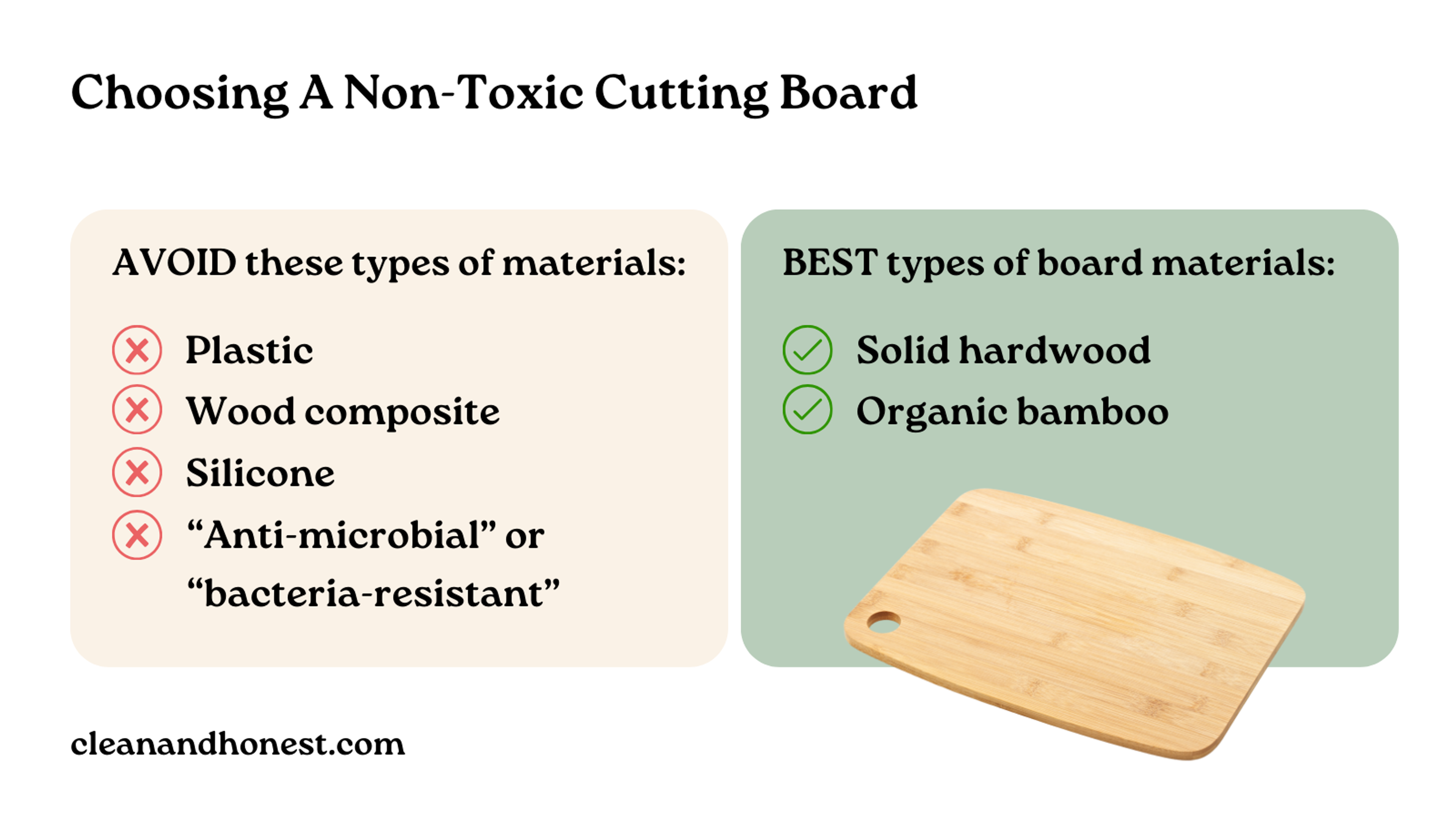
There are two options for the best cutting board material:
- Organic bamboo
- Solid hardwood
Bamboo is affordable, sustainable, and easy to clean. It is also naturally antibacterial! However, it's harder than solid wood, making it more likely to dull your knives over time.
Hardwood boards are beautiful and less tough on your blades than bamboo. They also have naturally antibacterial properties when adequately cleaned. While they are typically more expensive and require extra maintenance, they can last much longer. Hardwoods suitable for cutting boards include maple, walnut, teak, oak, or mahogany; avoid softwoods like pine and cedar.
Materials to avoid: Plastic vs. wood cutting boards
- Plastic: The most common cutting board material. It has been shown to shed microplastics into our food and water supply, which can cause endocrine disruption, cancer, reproductive disorders, and more. Plastic boards are also less sanitary, as the notches from blades create safe havens for bacteria. Chemicals from the plastic can leach into your food even from direct contact, especially if the food is hot!
- Wood composite: This material is made from wood pulp held together by resins or adhesives containing toxic chemicals (more on that below).
- Silicone: While BPA-free, food-safe silicone is a non-toxic material, it degrades very quickly, and many contain fillers that release toxic fumes.
- "Anti-microbial" or "bacteria-resistant": These aren't materials, but some boards have added chemicals to make them more bacteria-resistant. These chemicals are toxic and unnecessary with a pure bamboo or hardwood board.
Glues
In the best-case scenario, your non-toxic cutting board is one piece of solid hardwood with no glues. The second best is to inquire about the glue used on the board and ensure it is food-grade, formaldehyde-free, and verified non-toxic.
Finish
If finished, your wood cutting board should be finished with food-grade materials. Some great options include beeswax, carnauba wax, and coconut, walnut, or linseed oil.
Avoid lacquers and petroleum-based mineral oil, even if described as "food grade," as they often contain carcinogens.
Best non-toxic cutting boards
We've broken down our favorite non-toxic cutting board options by type.
Best bamboo cutting boards
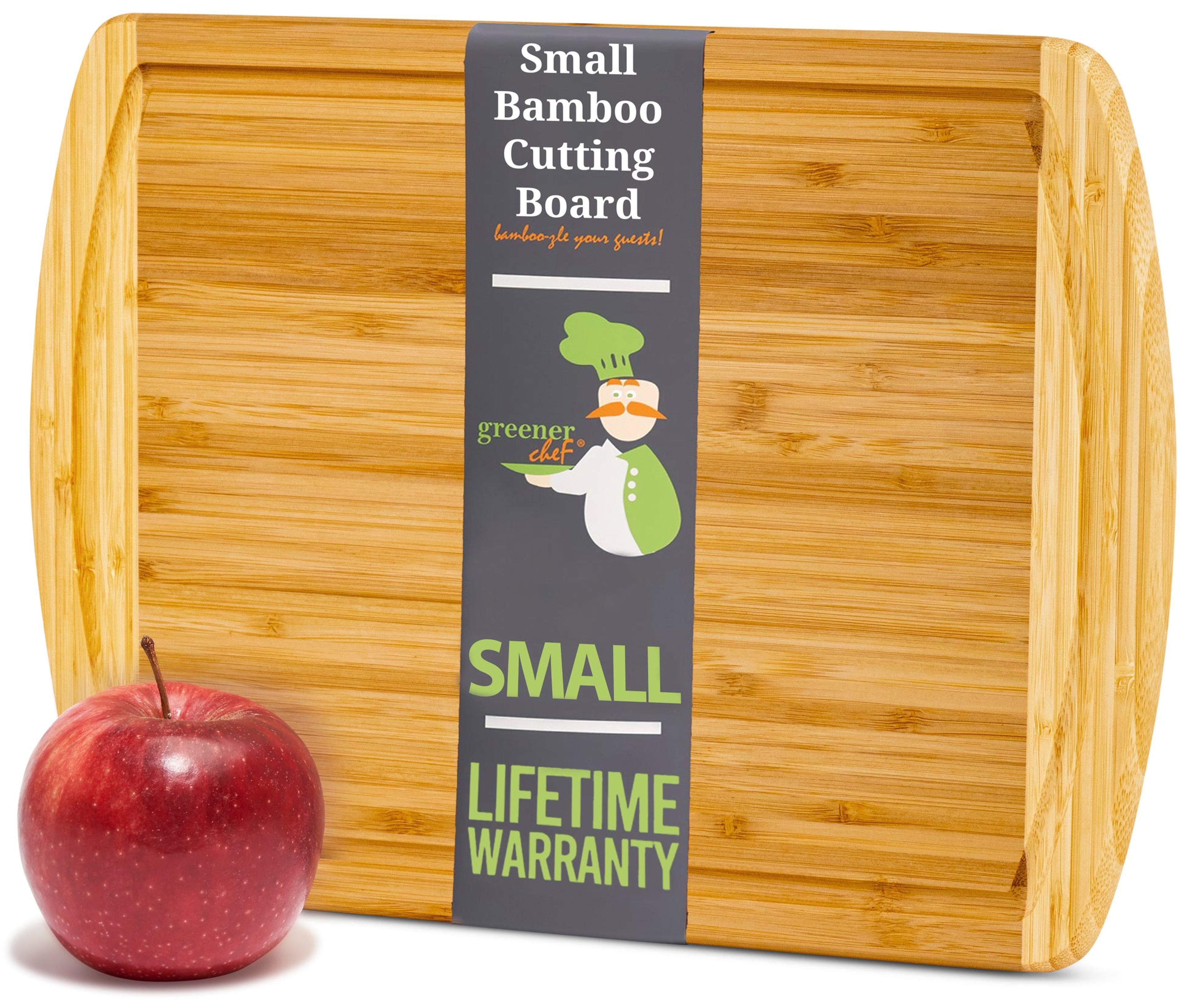
Top choice: Greener Chef organic bamboo cutting boards
- Material: Bamboo
- Price: $30+
- Size: Variety, 3-pack
This board is glue-free and free of oil or wax finish! The company used steam compression – so no glues or adhesives – to bind the bamboo together. The boards are untreated, and the company recommends regular conditioning with their organic walnut oil. This is a fantastic, affordable, and non-toxic option.
Honorable mention: Royal Craft wood organic bamboo cutting boards
- Type: Bamboo
- Price: $20+
- Size: Variety
This is another solid option for a bamboo cutting board, but it isn't perfect. They use an FDA-approved, non-toxic, formaldehyde-free, food-grade glue, and their boards come in larger size options than Greener Chef. Unfortunately, the boards are finished with mineral oil.
Best non-toxic cutting boards under $40
Vesta Homes single block or platter
- Material: Acacia
- Price: Under $20
- Size: 11 x 7.5 in - 15 x 10 in
Vesta Homes offers a small, single-block board that is glue-free and/or a medium board glued with formaldehyde-free, food-safe glue. They did not get back to me about what they use to finish their boards, so I'm not 100% positive that this option is completely non-toxic.
LUBAN single block
- Material: Mahogany
- Price: Under $20
- Size: 12 x 8 in (small)
This board is 100% glue-free and made from a single block of Mahogany wood and finished with linseed oil and beeswax!
Woodchuck
- Material: Walnut or maple
- Price: Less than $30
- Size: 7 x 12in - 10 x 14in
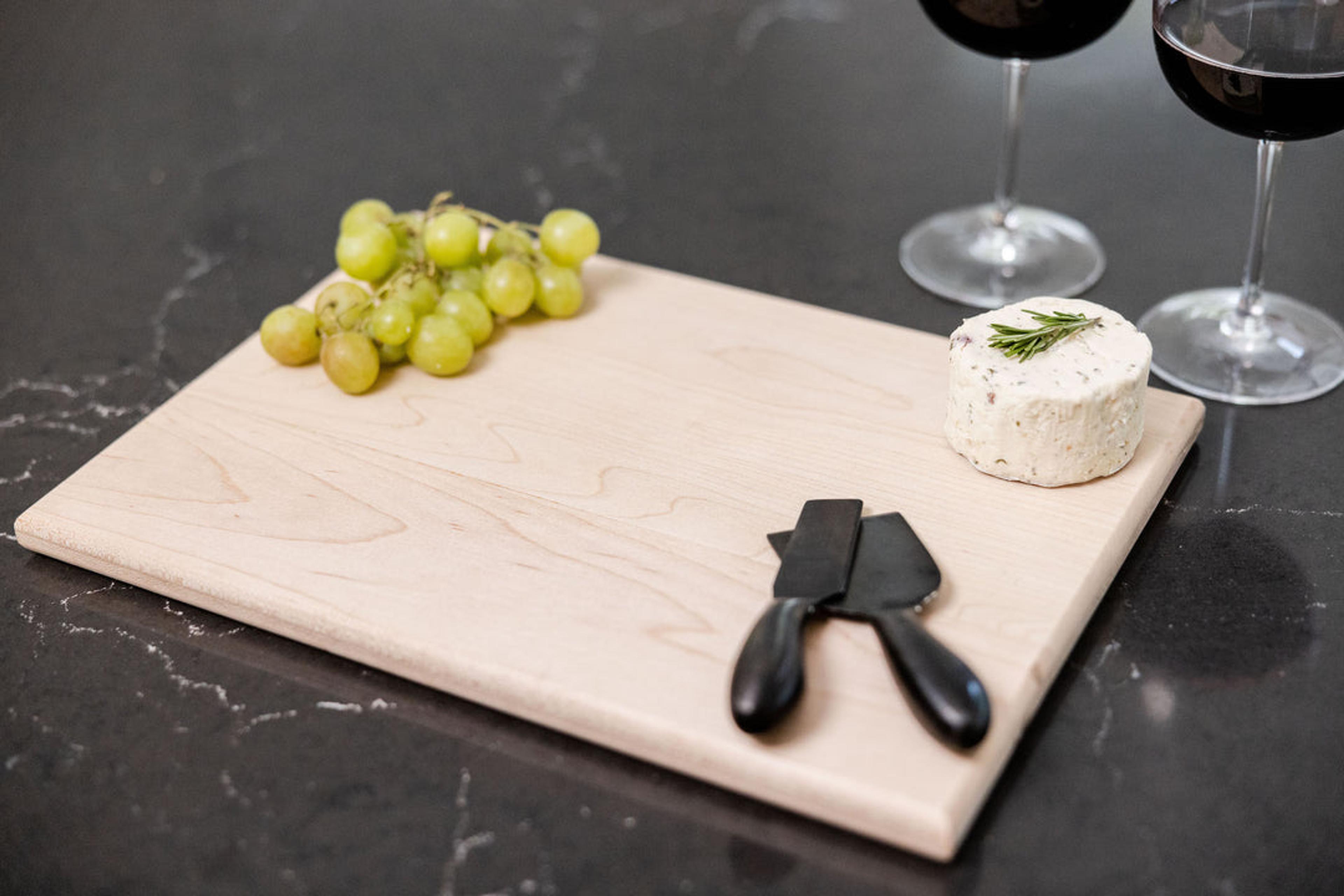
Their walnut or maple boards are glued with non-toxic, formaldehyde-free glue and finished with petroleum-free mineral oil, according to the representative I spoke with over email.
Non-toxic cutting boards under $80
Black cherry single block
- Material: Black Cherry wood
- Price: Less than $50
- Size: 14.4 x 9.4 in (medium)
This cutting board is glue-free and made from a single block of Cherry wood. It is finished with vegetable oil (not the best finish, but hey, it's glue-free!). As a nice bonus, it looks pretty lightweight and is 100% sourced and made in the USA.
Sapele wood single block
- Material: Sapele wood
- Price: Less than $60
- Size: 18 x 12 in (large)
This one is glue-free; I could not find out what finish they use, but they claim it's non-toxic and food-grade. It's the most affordable option I could find for a good-sized board.
Maple cutting board
- Material: Maple wood
- Price: Less than $75
- Size: 17 x 11 in (large)
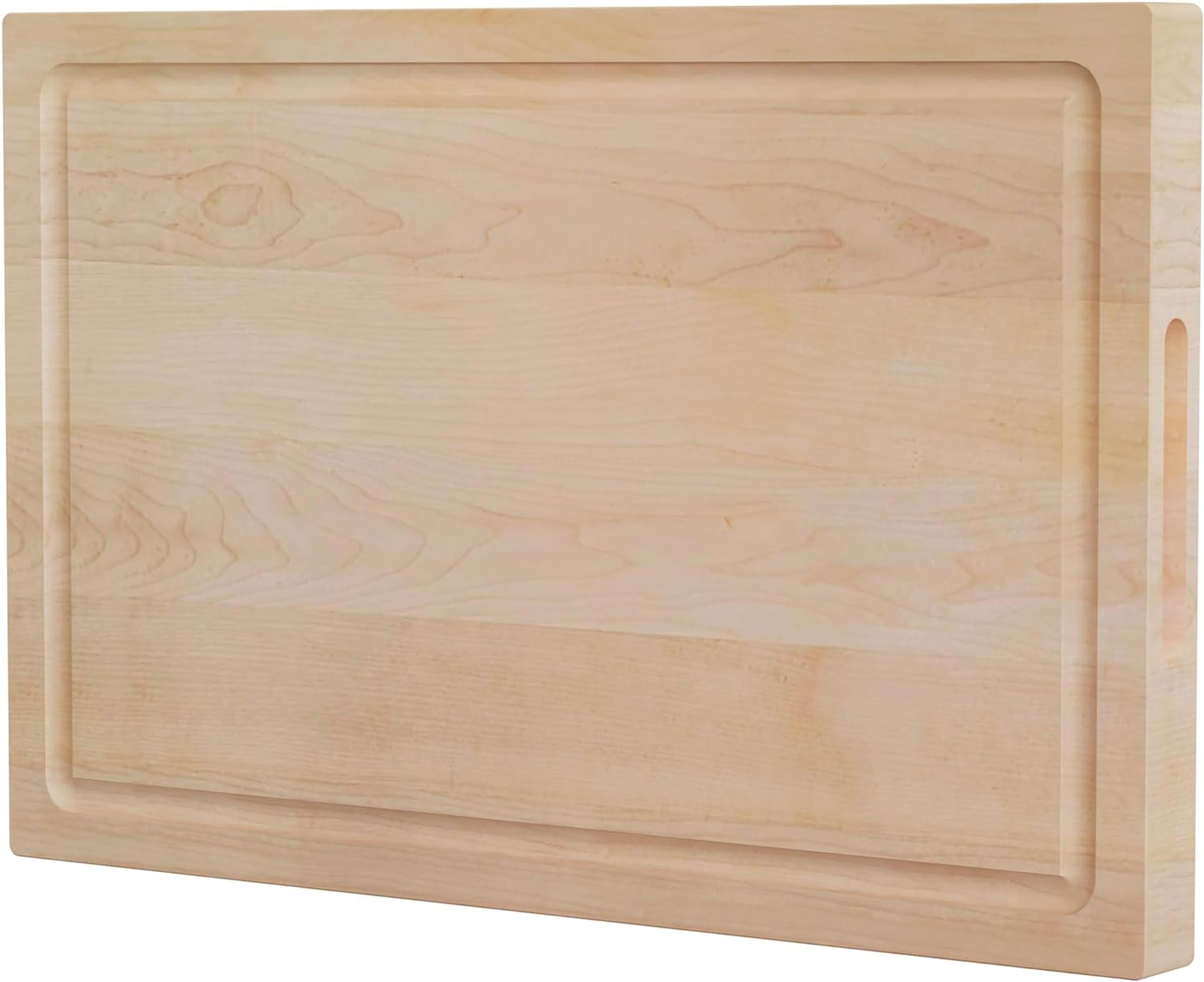
This board is made of maple wood and uses non-toxic glue, finished with beeswax, flaxseed oil, and linseed oil.
Non-toxic cutting boards under $150
Sonder LA maple cutting board
- Material: Maple
- Price: Less than $80
- Size: 17 x 13 in (large)
This board is also non-toxic, formaldehyde-free, glue-free, finished with a combination of mineral oil, beeswax, and flaxseed oil (again, mineral oil isn't ideal, but should be in lower quantities here because of the combination).
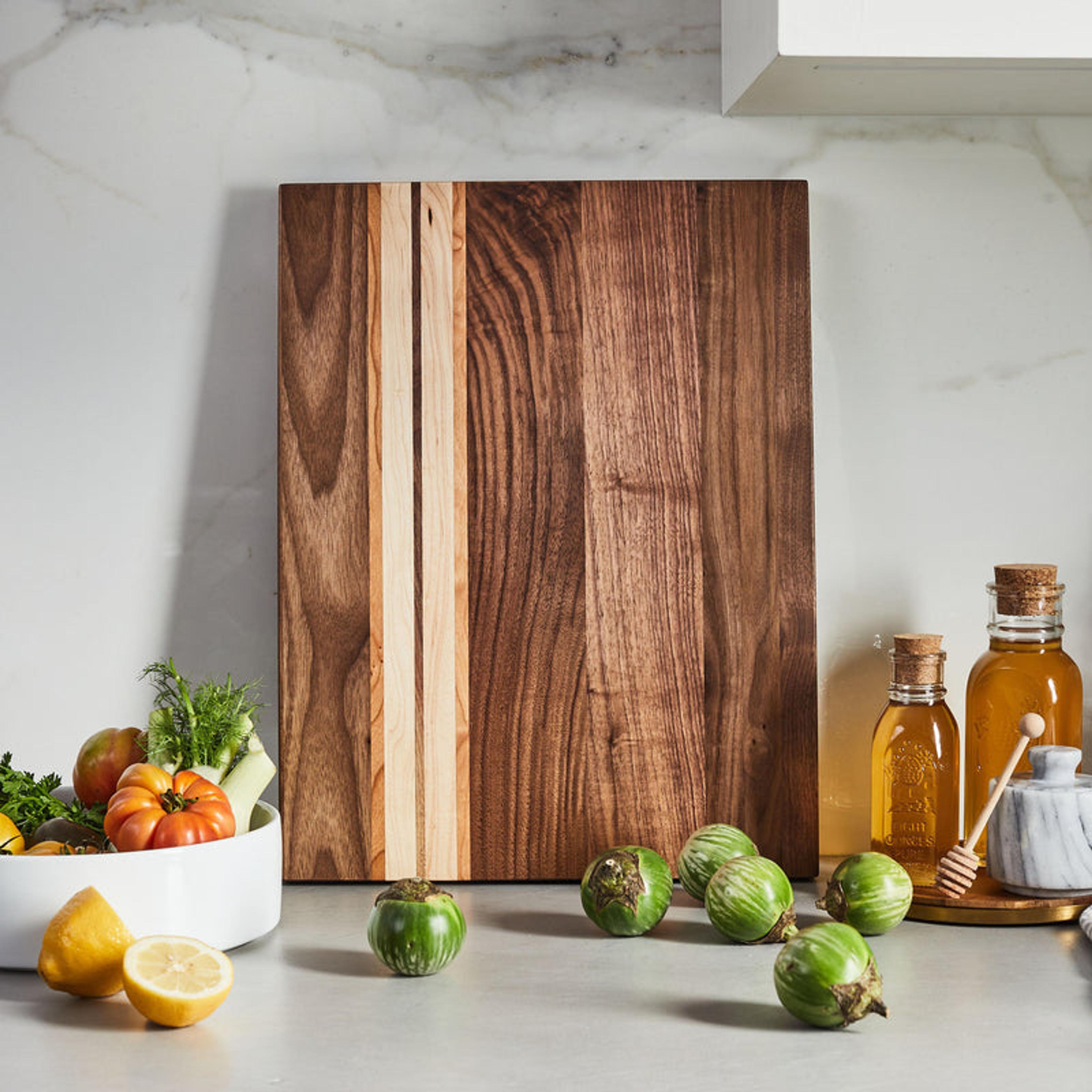
Our Place
- Material: Walnut
- Price: Less than $100
- Size: 14.4 x 9.4 in (medium)
This walnut board is made with non-toxic, formaldehyde-free glue and finished with a non-petroleum-based mineral oil.
How to clean your non-toxic cutting board
You'll notice that none of the wood boards are dishwasher safe, nor should they be submerged in water for long periods (this degrades the wood and can cause harmful bacteria to grow). Hand wash them with a non-toxic soap, dry them promptly, and store them in a well-ventilated area.
About once per month, treat your wood board with a non-toxic board oil or wax to help maintain its quality over time.
Cutting board oil & finish options
The board finish is an essential component of a non-toxic wood-cutting board. I avoid mineral oil, but thorough washing and re-oiling with natural oils should remove most, if not all, of the original oil residue from the manufacturer.
Here are some fantastic, non-toxic cutting board finishes for keeping your board in tip-top shape at home.
Ingredients: Walnut Oil
Ingredients: Coconut oil, food-grade beeswax, and carnauba wax
Caron & Doucet conditioning oil
Ingredients: 100% coconut-derived oil
Choosing the right cutting board
There you have it! When you are cooking, it's not just the quality of the food you are consuming that matters; it also matters what comes into contact with your food. Good luck finding the right cutting board for your needs.
Also worth reading
Frequently asked questions
Are plastic or wood cutting boards safer?
Wood and bamboo cutting boards are generally safer than plastic. Studies show that plastic boards develop deep knife grooves that harbor bacteria and are difficult to sanitize, while wood has natural antimicrobial properties. Avoid plastic boards with deep cuts or discoloration.
What is the safest material for a cutting board?
End-grain hardwood (like maple or walnut) and FSC-certified bamboo are the safest cutting board materials. They resist bacterial growth, don't leach chemicals, and are durable. Avoid plastic, composite, and boards with non-stick coatings.
Are bamboo cutting boards non-toxic?
Most bamboo cutting boards are safe, but check that they use formaldehyde-free glues. Look for boards made with food-safe adhesives and finished with food-grade mineral oil. Avoid cheap bamboo boards that may use urea-formaldehyde adhesives.
Do wooden cutting boards harbor bacteria?
Research shows that bacteria on wooden cutting boards die off over time and don't multiply in the wood grain the way they do in plastic grooves. Hardwood cutting boards, when properly maintained with mineral oil and hand-washed, are hygienic and safe.
How do I clean a wood cutting board properly?
Wash with hot soapy water immediately after use and dry upright to prevent warping. Never soak in water or put in the dishwasher. Apply food-grade mineral oil monthly to prevent cracking. For deep sanitizing, sprinkle coarse salt and rub with half a lemon.
Related articles

Best pasture-raised chicken (2026): Top brands & what to look for
How to find the best pasture-raised chicken—what labels to trust, top brands, and why quality sourcing matters for your health and the environment.

Best grass-fed beef (2026): How to shop & top brands to buy
How to shop for the best grass-fed, organic beef—what labels actually mean, trusted brands, and why quality sourcing matters for your health.

Best cast iron skillets (2026): Safest & most durable picks
The safest, most durable cast iron skillets of 2026, from Lodge to Field Company and Smithey, all PFAS-free, plus how to season and care for...


